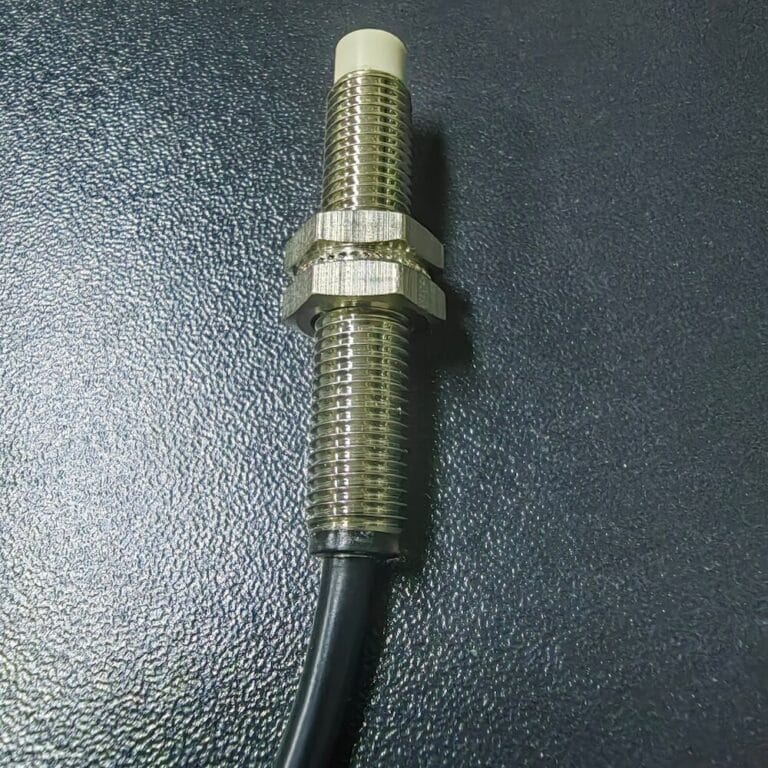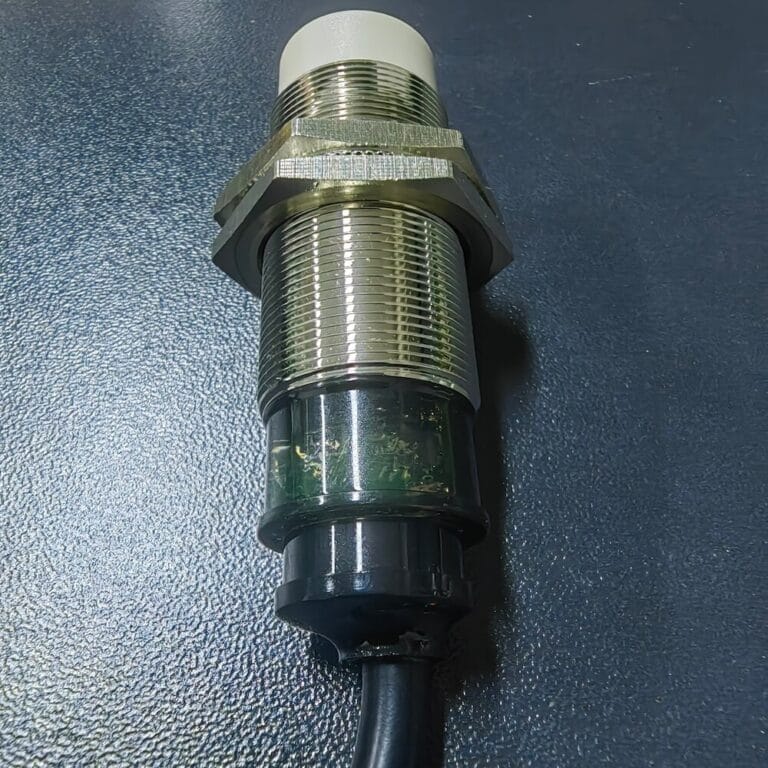

Conveyor belts are widely used in automated assembly, logistics sorting, packaging and machining workshops. This classic two-proximity-sensor control circuit relies on intermediate relays and AC contactors to realize logic control of the conveyor, which can complete functions like position limiting, automatic start-stop and fault interlock. Below we break down the wiring structure, operation logic and common maintenance tips in detail.
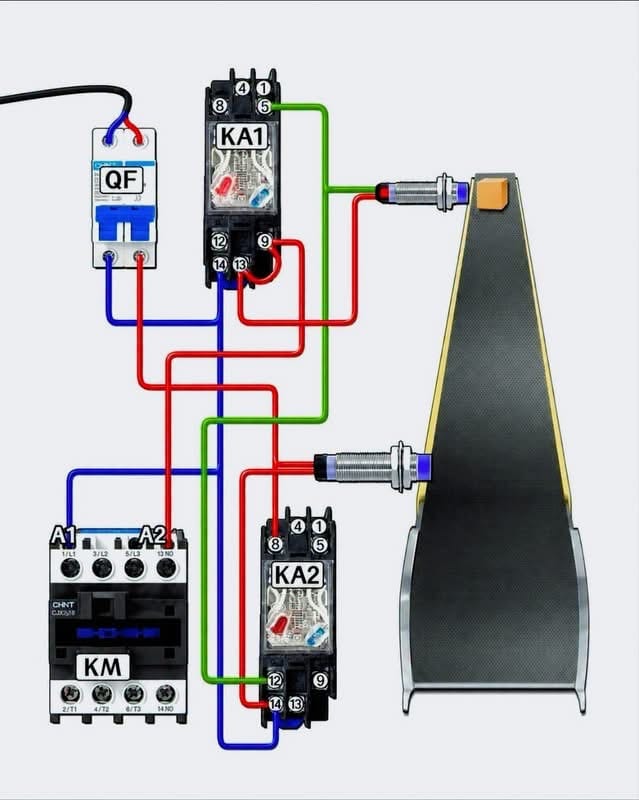
1. Introduction of Each Electrical Component
- QF: Circuit BreakerThe total power input protection component, responsible for the overall circuit short-circuit and overload protection. It can cut off the power supply quickly when the circuit has abnormal current, to protect the subsequent relays, contactors and sensors.
- KA1, KA2: Intermediate RelaysThey undertake signal conversion and contact expansion tasks. The two groups of contacts (8/4, 12/13/14 and other pin positions) can switch high-current loops with small sensor signals, realizing interlocking logic between the two detection points on the conveyor.
- KM: AC ContactorThe executive component that directly controls the conveyor motor. Its main contact (A1/A2 coil end, lower power output terminals) switches the motor main circuit, and the pull-in and release of the coil determines whether the conveyor runs or stops.
- Two Proximity SensorsInstalled at different positions on the conveyor track, used to detect the passing of workpieces. They output switching signals to drive the pull-in or release of KA1/KA2 relays, forming the trigger condition for conveyor operation.
2. Complete Working Logic of the Circuit
- Power supply stageAfter closing the QF circuit breaker, the control circuit gets power, and the whole control loop enters the standby state.
- Signal trigger processWhen a workpiece passes the upper proximity sensor, the sensor outputs a signal to drive the KA1 intermediate relay to pull in. The contacts of KA1 act, changing the on-off state of the KM contactor coil loop;When the workpiece moves to the lower detection position and triggers the second proximity sensor, KA2 is energized and pulled in, and its contacts cooperate with KA1 to realize logic interlock, controlling the continuous operation or automatic stop of the conveyor.
- Motor execution actionWhen the KM coil is energized, the main contact of the contactor closes, and the conveyor motor is powered on to run; when the relay contact cuts off the KM coil power, the contactor resets, and the conveyor stops running immediately.
3. Core Advantages of This Dual-Relay Dual-Sensor Scheme
- Reliable position interlock controlTwo detection points can set front/rear limit, material in-place confirmation functions, effectively preventing workpiece accumulation, material deviation and other faults on the conveyor.
- Strong load driving capacityProximity sensors can only output small current signals, while intermediate relays can drive high-power AC contactors, adapting to the motor load of large industrial conveyors.
- Easy maintenance and expansionStandard relay and contactor pins are universal, and subsequent expansion of fault alarm, manual switching functions can be realized by adding auxiliary contacts on the basis of the original circuit.
4. Common Wiring & On-site Fault Troubleshooting Tips
(1) Wiring standard notes
- Distinguish the live wire and neutral wire access of QF, avoid reverse connection leading to failure of protection tripping;
- The coil terminals (A1/A2) of KM must be connected to the control loop strictly according to the diagram, and the live wire/neutral wire cannot be mixed randomly;
- The signal lines of proximity sensors need to be routed separately from the high-current main power line, to avoid electromagnetic interference causing false triggering.
(2) Typical fault solutions
- Conveyor does not run after sensor is triggeredCheck whether the KA1/KA2 coil is energized, measure whether the relay contacts are normally closed/normally open to act; then check if the KM coil has voltage, and replace the contactor if the coil is damaged.
- Sensor triggers frequently but the conveyor runs intermittentlyCheck whether the wiring terminals of the relay pins are loose, and whether the installation distance of the proximity sensor exceeds the rated sensing distance, adjust the sensor mounting position and fasten the wiring terminals.
- QF frequently trips during operationCheck for short circuits in the wiring of KM main circuit or sensor lines, eliminate line aging and insulation damage problems.
5. Industrial Optimization Upgrade Suggestion
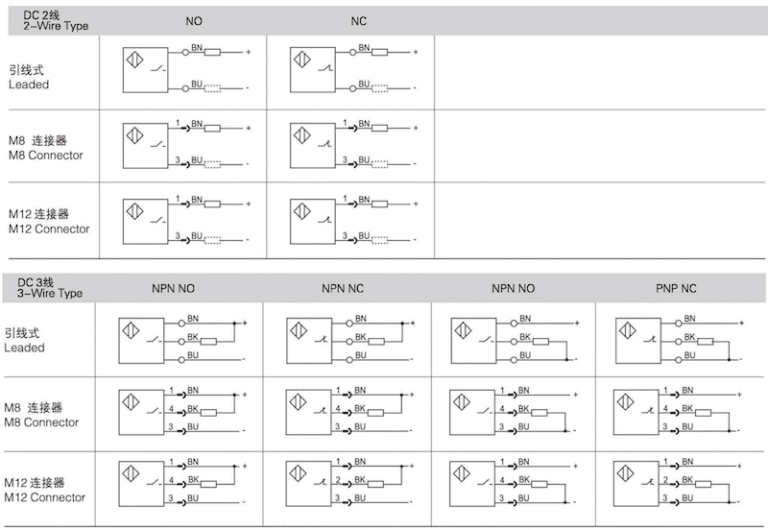
For workshops with oil mist, metal dust and water splashes, it is recommended to adopt IP67 rated inductive proximity sensors (such as HongSton LS5/LS6 series) for the detection part. The fully sealed metal housing can avoid circuit damage caused by dust and liquid infiltration, matching the long-term stable operation demand of the conveyor; meanwhile, the optional NPN/PNP output modes can perfectly adapt to the coil voltage specifications of domestic and imported intermediate relays.