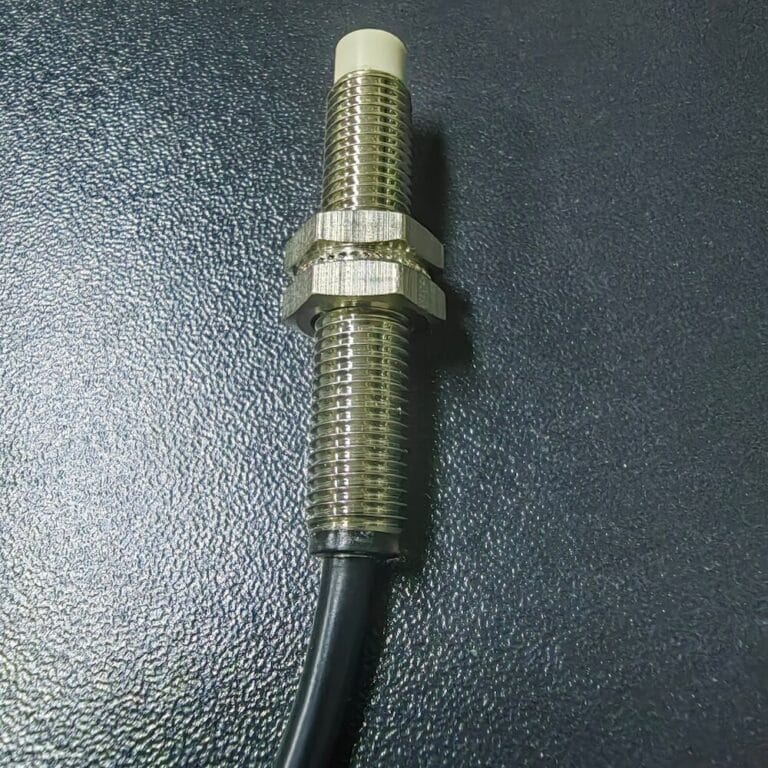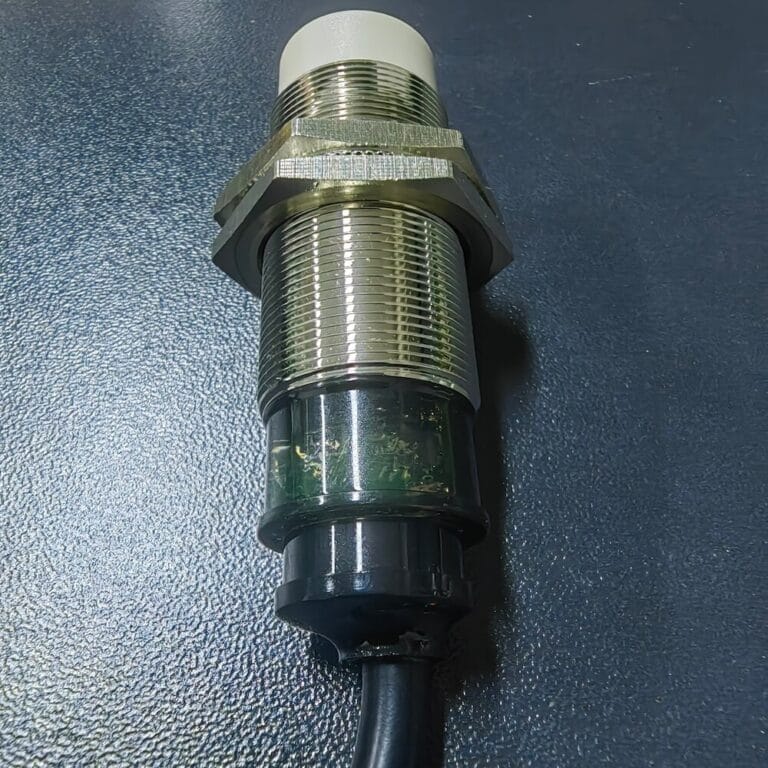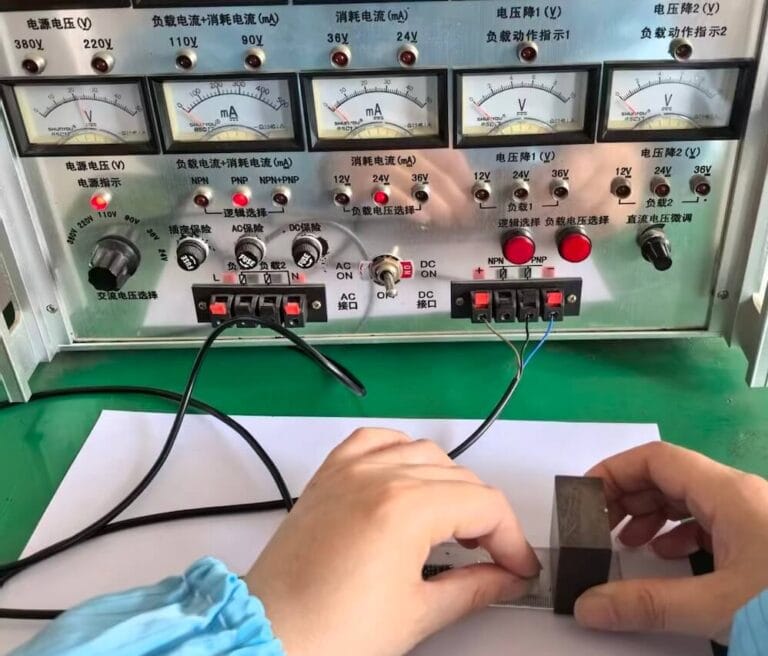

Proximity switches are widely used non-contact sensors in industrial automation. They trigger control signals when objects approach without any mechanical contact, and are extensively adopted in Malaysian automated factories, automotive production, packaging and logistics equipment. These sensors can drive electrical devices or send commands to PLC systems. Featuring stable performance, fast response, long service life, strong anti-interference capability, waterproof, shockproof and corrosion resistance, they are essential components for industrial production line upgrading in Malaysia.
Common types include inductive, capacitive and Hall effect proximity switches with DC and AC power supply options. The mainstream models are NPN and PNP. For negative signal input, choose NPN type; for positive signal input, PNP type is the right choice, which matches most industrial control equipment and PLC systems in Malaysia.
Working Principle
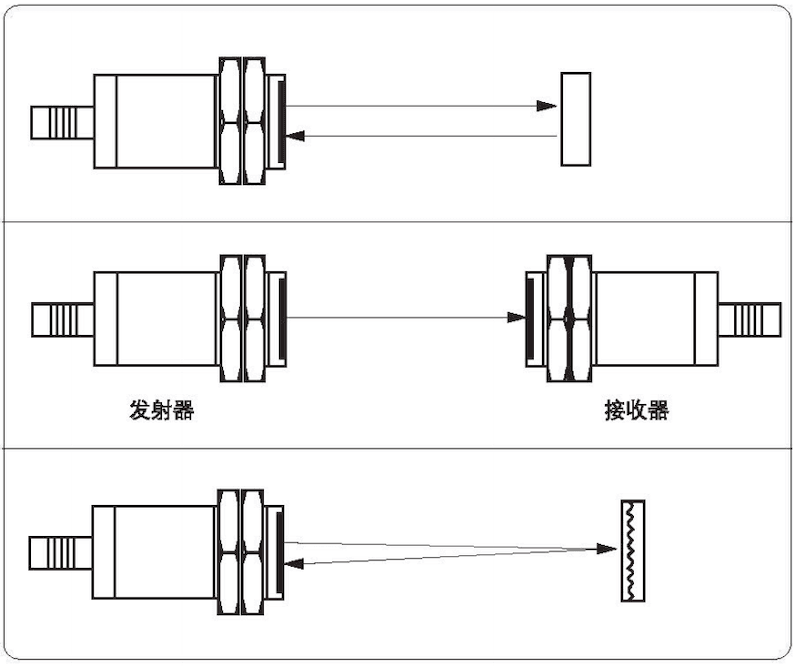
Proximity switches operate based on electromagnetic, dielectric or Hall effect principles. After power on, the sensor generates an electromagnetic or electric field. When a target object approaches the sensing surface, internal circuit parameters change and the switch outputs on/off signals. This non-contact detection mode ensures reliable operation for various automated equipment across Malaysia.
Key Features
Compared with traditional mechanical switches, proximity switches have no wear and high repeat accuracy. They work well in humid and dusty industrial environments in Malaysia, with low failure rates for long-term continuous operation on mass production lines.
Wiring Guide & Wiring Diagram
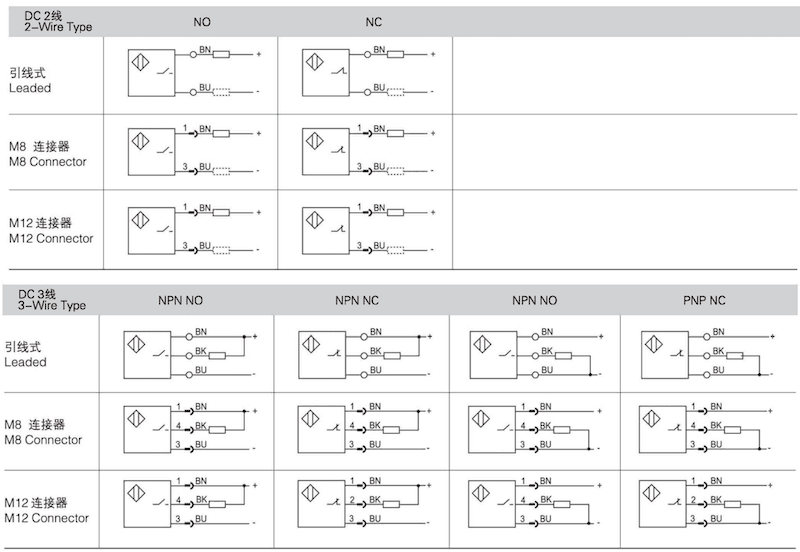
Proximity switches used in Malaysian industrial equipment are mainly divided into 2-wire and 3-wire types (NPN / PNP). Correct wiring is vital for installation and troubleshooting.
- 2-wire type: Connect the switch and load in series to the power supply, easy for general industrial applications.
- 3-wire type: Brown wire for positive power, blue wire for negative power, black or yellow wire for signal output. For NPN sensors, connect the load to positive power; for PNP sensors, connect the load to negative power.
- PLC matching tips for Malaysia: NPN sensors fit Japanese-standard PLC, while PNP sensors suit European-standard PLC. Wrong selection will cause equipment malfunction.
- 3-wire proximity switches deliver more stable performance with no residual current interference, ideal for high-precision production lines in Malaysia. Some models support both NO and NC output, please follow the official manual for wiring.
Summary
NPN and PNP proximity switches are the most popular options for industrial automation in Malaysia. Understanding their models, working principle and standard wiring methods helps you finish installation, commissioning and troubleshooting efficiently, and keeps production lines running smoothly.