
Many automation engineers, maintenance technicians, and factory procurement staff face confusion when selecting proximity sensors for production lines. With various types, output modes, sizes, and installation standards on the market, improper selection is the leading cause of sensor false triggering, short service life, and frequent production line downtime. Based on practical industrial application experience, this comprehensive proximity sensor selection guide sorts out all core selection rules and common industry mistakes to help users pick the perfect sensor for different automation scenarios.
1. Four Main Types of Proximity Sensors & Applicable Scenarios
Different proximity sensor types correspond to distinct detection objects and working environments, which is the primary basis for selection:
- Inductive Proximity Sensor: Specialized in metal workpiece detection, widely used in CNC machine tools, stamping equipment, and automated assembly lines, featuring strong anti-interference and stable performance.
- Capacitive Proximity Sensor: Detects both metal and non-metal objects including plastic, liquid, rubber, and packaging materials, ideal for packaging and injection molding equipment.
- Photoelectric Sensor: Long-distance detection for workpiece counting, material induction, and logistics conveyor positioning, suitable for medium and long-distance automation monitoring.
- Ultrasonic Sensor: Adapts to all object detection, unaffected by color and transparency, perfect for long-distance liquid level and pallet detection.
2. Core Output Mode Selection: NPN vs PNP, NO vs NC
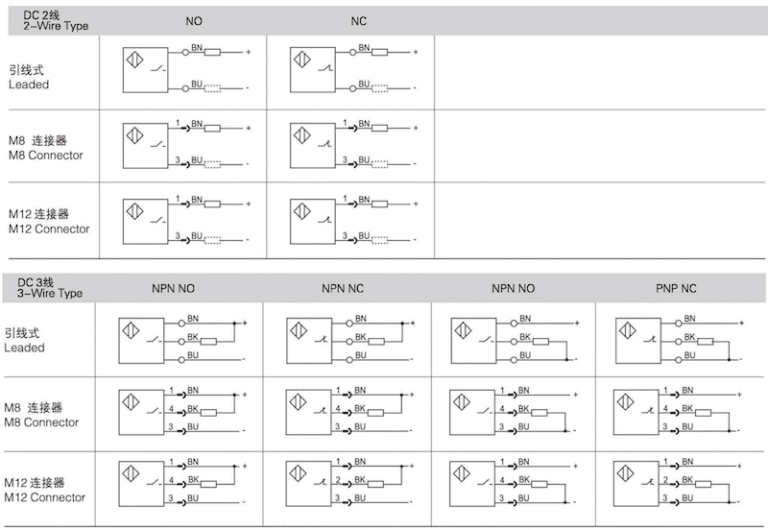
Mismatched sensor output modes with PLC and control systems is the most common on-site error. European automation systems (Siemens, Schneider) are mostly compatible with PNP sensors, while Japanese systems (Mitsubishi, Omron) mainly adapt to NPN sensors.
In addition, users can chooseNO (Normally Open) or NC (Normally Closed) status according to equipment safety logic, effectively avoiding equipment failure risks caused by signal exceptions.
3. Flush vs Non-Flush Installation (Most Overlooked Industry Mistake)
Most engineers ignore the difference between flush and non-flush mounting, resulting in reduced sensing accuracy and unstable signals.
- Flush Mount Sensor: Embedded installation, anti-collision, suitable for compact equipment installation spaces, with standard fixed sensing distance.
- Non-Flush Mount Sensor: External installation with longer sensing distance, reserved for scenarios requiring long-distance metal detection.
4. Sensing Distance: Datasheet Parameters vs Practical On-Site Use
Many users only refer to the official datasheet sensing distance, ignoring on-site environmental interference. Metal dust, oil mist, and adjacent sensor installation will attenuate the actual sensing distance. It is recommended to reserve a 20%-30% distance margin during selection to prevent missed detection and false triggering.
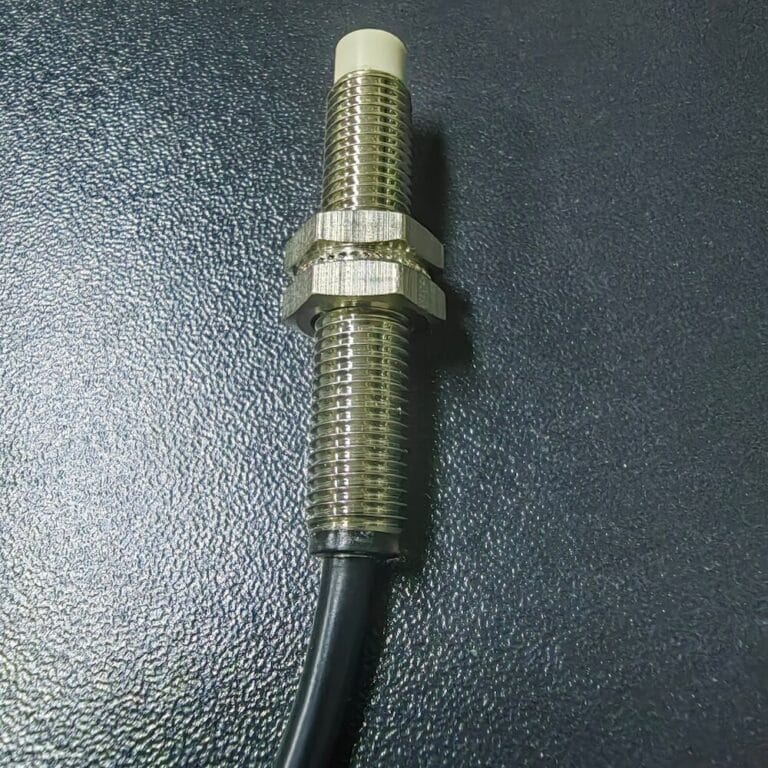
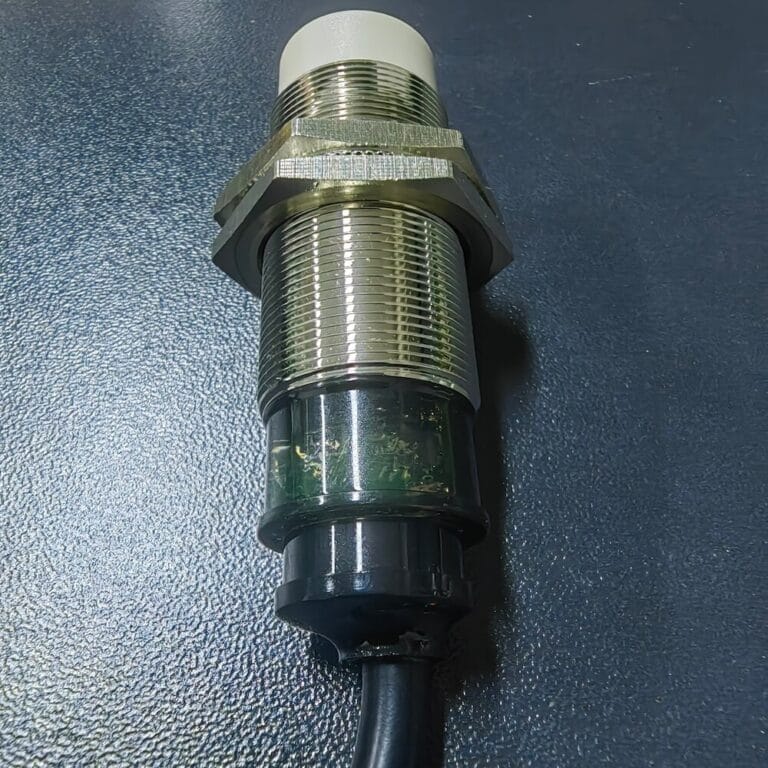
5. Standard Sensor Size Selection (M8 / M12 / M18 / M30)
Sensor size directly matches equipment installation space and detection requirements:
- M5/M8 Miniature Sensors: For precision micro automation equipment and compact machine tools with limited space.
- M12/M18 Conventional Sizes: Universal for most assembly lines, conveyor systems, and packaging equipment.
- M30 Large Size: For long-distance detection and heavy-duty industrial equipment scenarios.
6. AC vs DC Power Supply & Standard Wiring Tips
Industrial proximity sensors are divided into AC and DC power supply types. 10-30VDC wide-voltage DC sensors are the mainstream for modern automated production lines, with stronger stability and wider compatibility. Standard wire color coding and standardized installation can effectively avoid wiring burnout and signal disorder faults.
Reliable IP67 Proximity Sensor Solution for Full Industrial Scenarios
For users pursuing high precision, stability, and harsh environment adaptability, HongSton industrial proximity sensors fully meet all industrial selection standards. Our LS5 M5 Miniature Inductive Proximity Sensor and LS6 series sensors solve the pain points of compact equipment precision detection.
Featuring 1mm ultra-precise sensing distance, 10-30VDC wide voltage input, and optional NPN/PNP & NO/NC modes, these sensors support flush/non-flush mounting with flexible wiring methods. Adopting full metal housing and IP67 waterproof and dustproof protection grade, they work stably in dusty, oily, and humid harsh workshops.
With low power consumption, high repeat accuracy, and fast 2.5KHz response frequency, HongSton LS5 and LS6 sensors comply with IEC60947-5-2 international industrial standards. They are widely applied in machine tools, conveyor systems, packaging equipment, and automatic production lines, serving as ideal replacement solutions for mainstream international brand sensors.
Final Conclusion
Proximity sensor selection is not based on random size or price, but on comprehensive judgment of detection object, installation space, control system mode, and workshop environment. Avoiding common industry mistakes such as confused installation methods and ignored sensing distance margin can greatly reduce equipment failure rates and maintenance costs.
HongSton provides full-series standard and miniature IP67 proximity sensors with complete specifications, professional model selection guidance, and stable after-sales support, helping automation engineers and factory users complete accurate sensor matching efficiently.